About us · Symbolism · told by Jacob Moth
The symbolism of The Magic Garden
To me, the whole garden is a map of the inner journey: the hero's journey, as the 22 cards of the tarot's Major Arcana tell it, from The Fool to The World. The gate, the lake, the paths, the tower and the tunnel each have their own meaning. And in the middle of it all is the butterfly, our symbol.
Here I tell you about some of the places, in the order you come to them as you walk through the garden. There are many more.
Jacob Moth
Our symbol: the butterfly
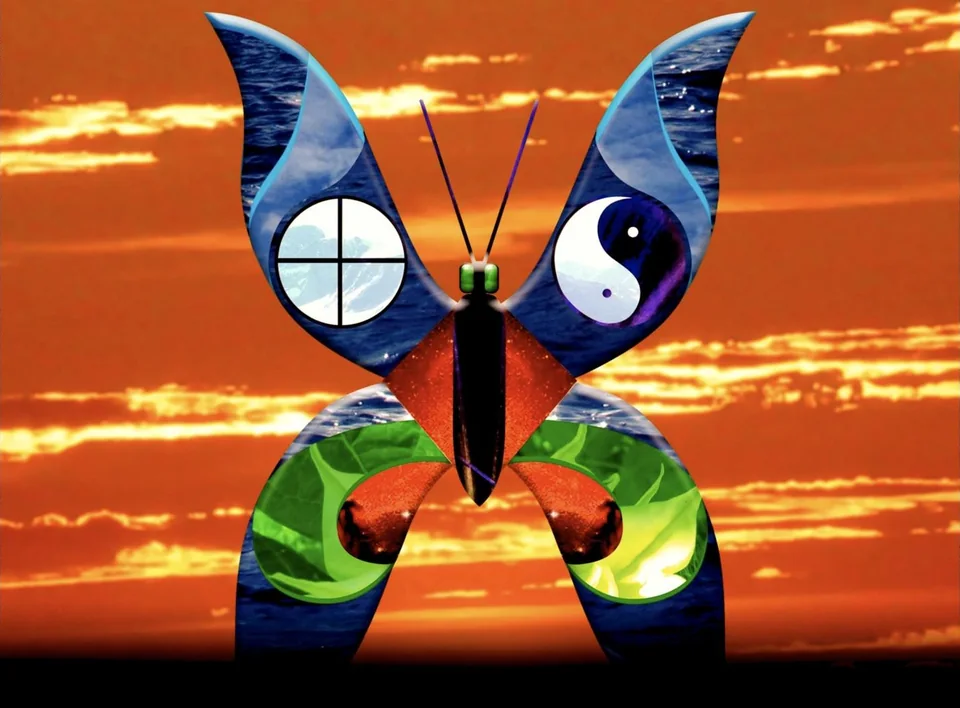
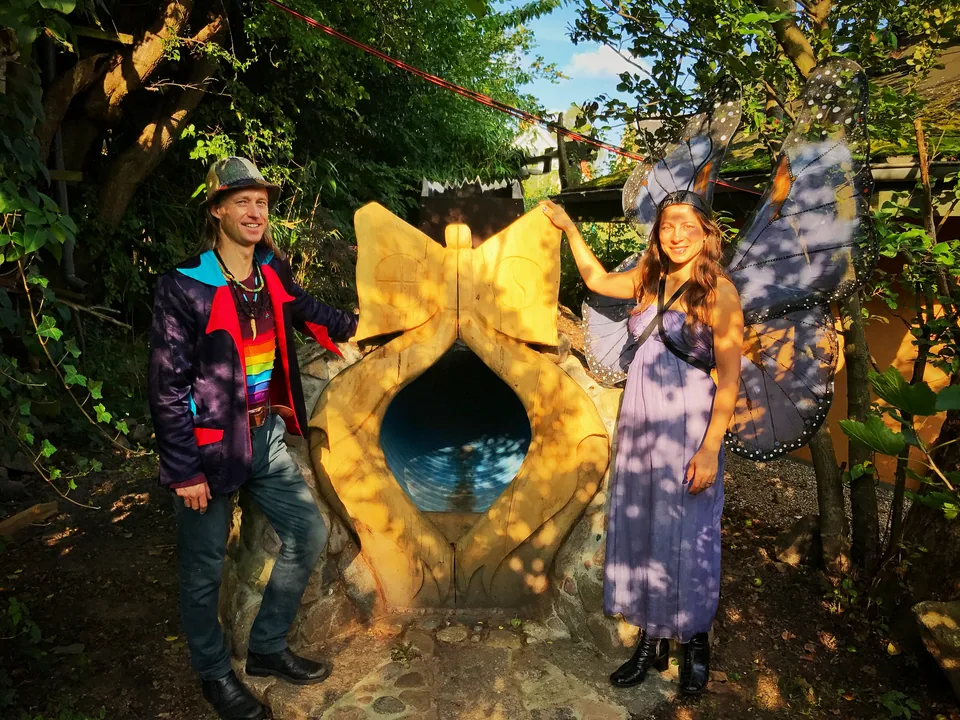
The butterfly is the symbol of The Magic Garden. You see it as a flag in the middle of the garden, and at the exit of the tunnel it is carved in wood. It is an ancient symbol of death and rebirth – and of the soul.
It also points to one of the best-known old stories in the world, “The Soul and the Butterfly”, by the Chinese philosopher Chuang Tzu (Zhuangzi), who lived about 2,300 years ago:
Chuang Tzu once dreamt that he was a butterfly. He drifted from flower to flower, light and free, going wherever he liked. He had no idea that he was Chuang Tzu.
Then all at once he woke up – and there he lay, Chuang Tzu and nobody else.
Now he could no longer tell: was he Chuang Tzu, who had dreamt of being a butterfly, or a butterfly now dreaming of being Chuang Tzu?
Somewhere between Chuang Tzu and the butterfly lies a difference. It is called the transformation of things.
The Sun Wheel and yin and yang
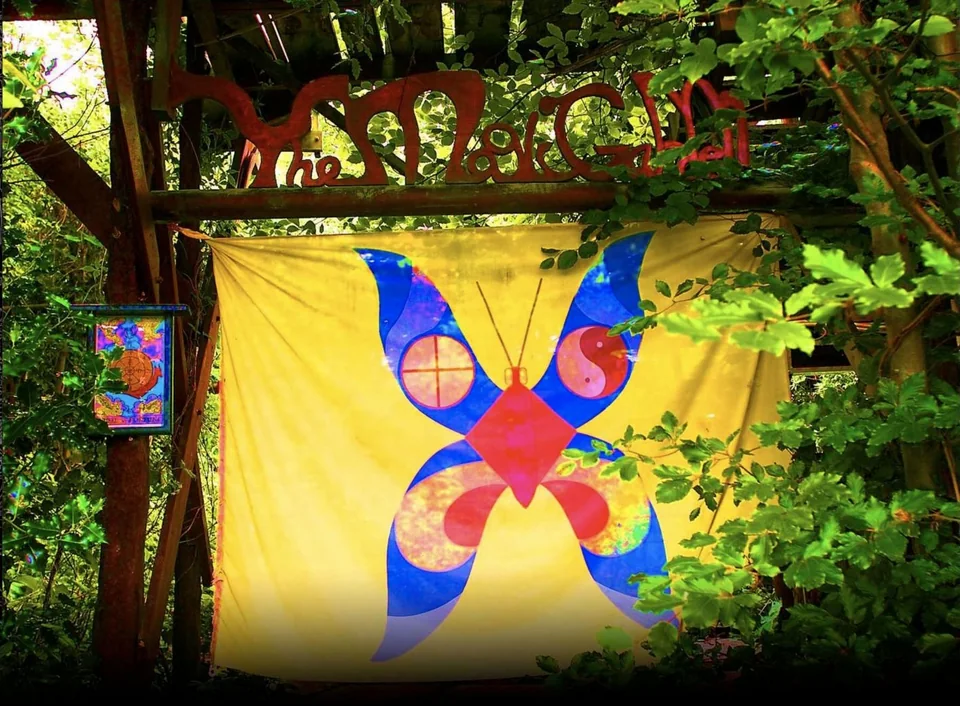
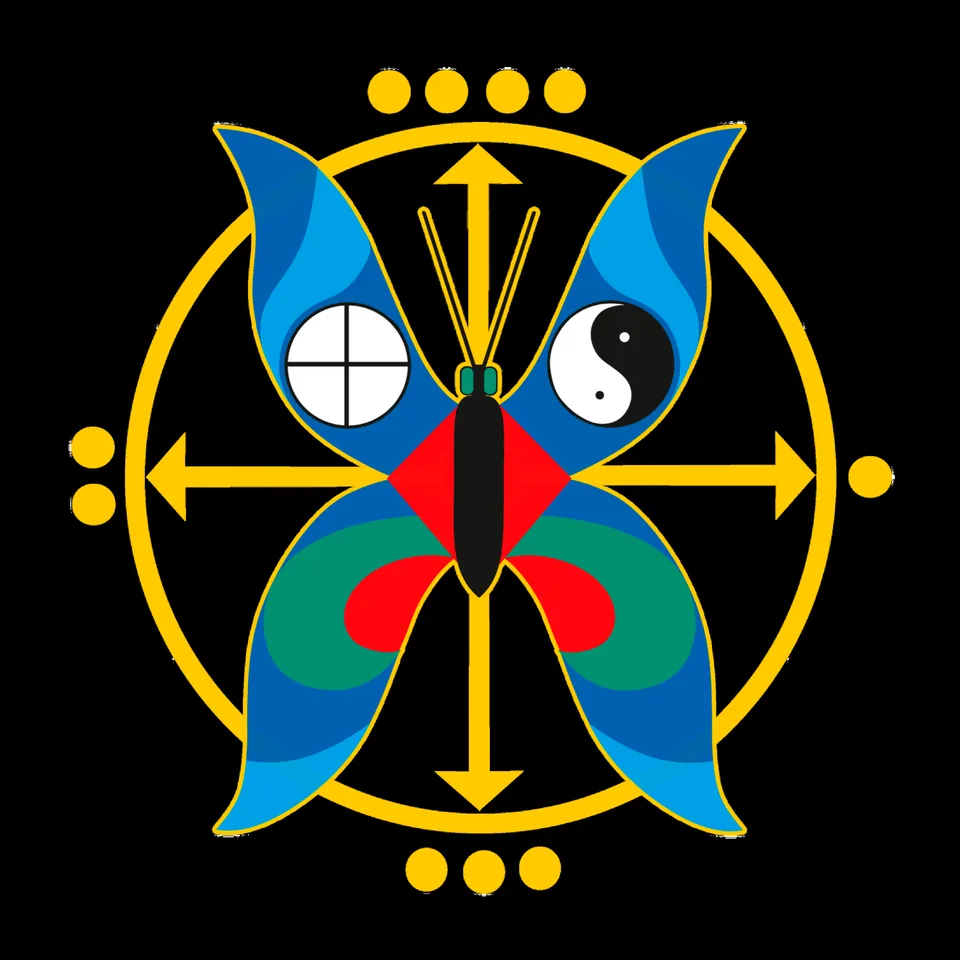
On the butterfly's left wing sits the ancient sign of the sun: the sacred circle with the four corners of the world and the four elements – and in the middle, the centre of the Universe.
Inside the circle are mythical time and mythical space. Outside the circle are profane time and profane space – the time and space of everyday life.
The vertical line is also the Axis Mundi, the axis of the world. It runs from the Underworld through Midgard, the middle world, up to the Upper World. The horizontal line is the axis of time: past, present and future.
On the other wing sits the Far East's universal sign for yin and yang.
The map of the garden
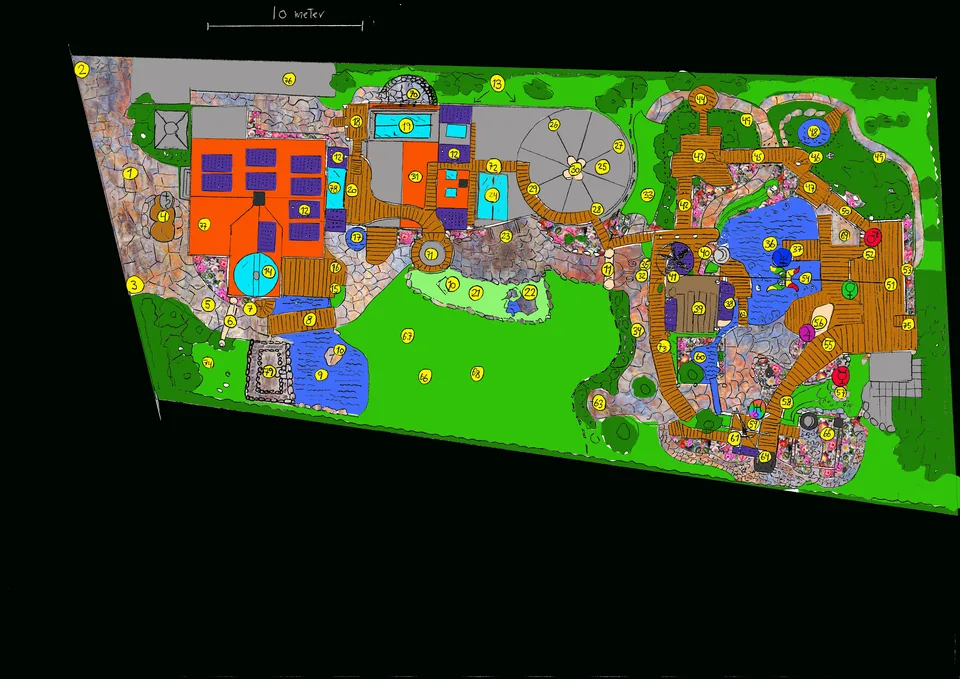
I drew the garden myself, as it looks from above. The numbers on the map are the garden's own place numbers, and there are far more places than I can tell you about here. Below, we pass some of them – from the Lord of the Trees in front of the house to the centre of the sacred garden.
- Lord of the TreesThe beech, 1666–1999
- The Front GateThe Fool, card 0
- The Promised Land and the pathsThe lake and the paths
- The heart of the place: the foyerThe Tree of Life
- The mandalaSix religions
- The Key to the UniverseThe ground plan
- Through the Portal to the sacred gardenThe power animals
- The Hero's Choice: three pathsThree paths
- The Death-Rebirth TunnelThe rite of passage
- The centre of the sacred gardenThe medicine wheel
Lord of the Trees
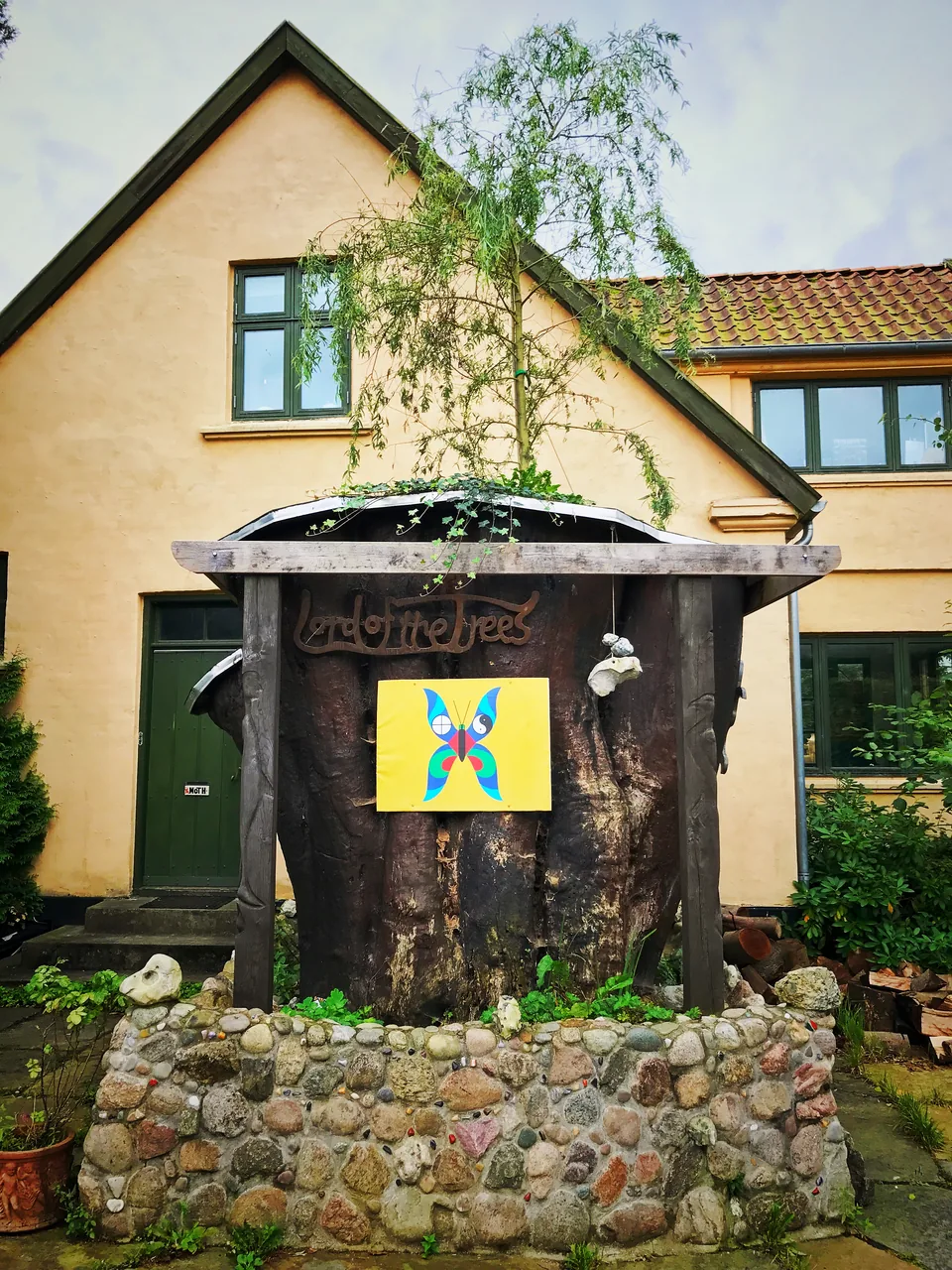
In front of The Magic Garden stand the remains of Denmark's oldest beech tree. From 1666 it grew in the park of Fredensborg Palace, until a storm brought it down in 1999. We bought the stump that same year – all eight and a half tonnes of it. On top of it we have planted a new tree.
It stands for some of the basic ideas the whole place is built on:
- New life is born from the old
- Death and rebirth
- Transformation
- Experiencing time as a circle rather than a line – and thinking and acting from that
The Front Gate
Card 0 · The Fool
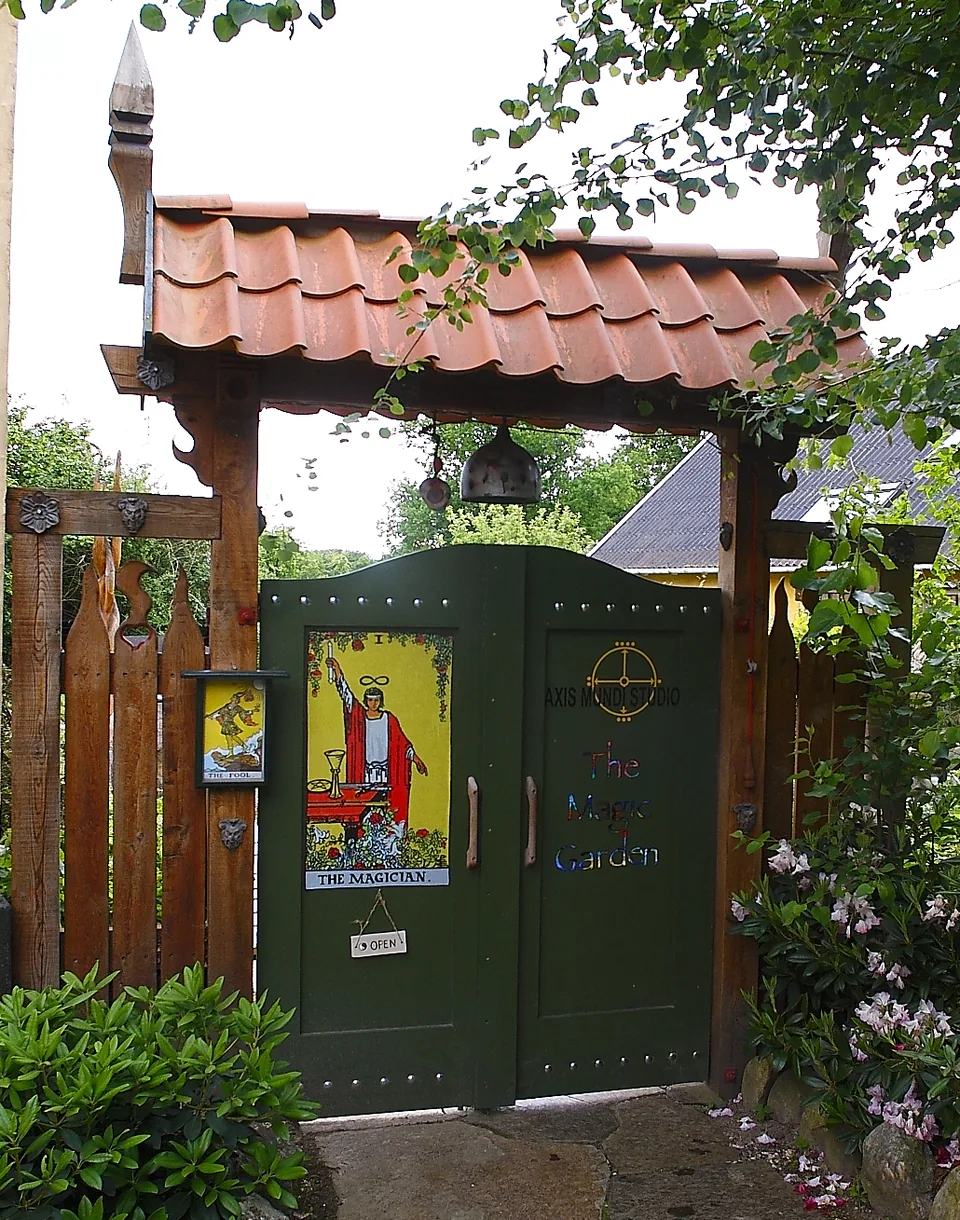
The first card of the Major Arcana is The Fool. You find it on the gate that opens onto the main path of the garden.
On the gate sits an old lightning rod from the Powder House in Christiania, the free town in Copenhagen, and the hinges come from one of Christiania's old gates.
From here, the next cards follow the architecture, one after another. Together they describe the human journey from childhood to the fully enlightened human being.
The Promised Land and the paths
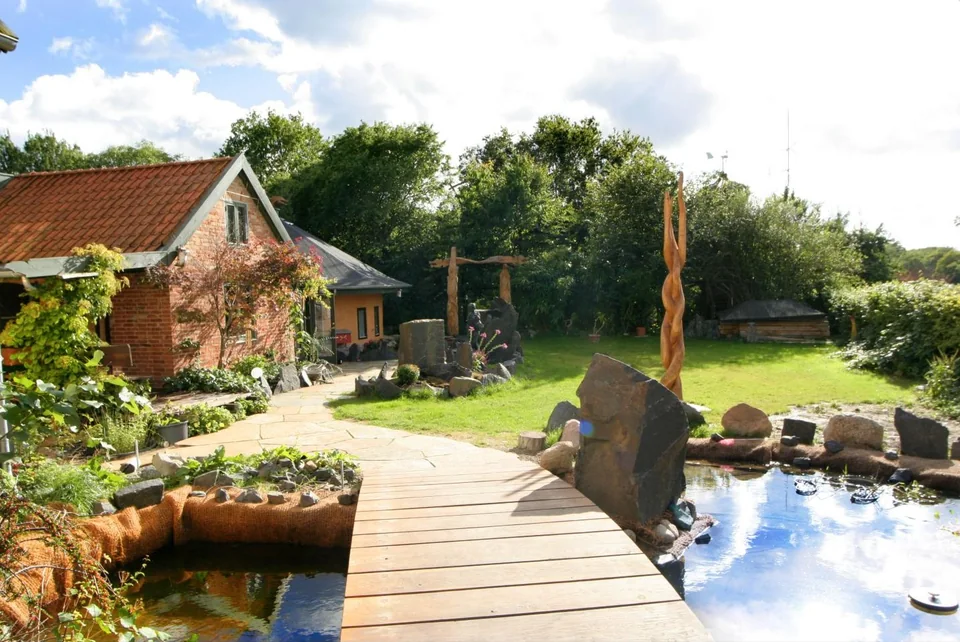
To reach the sacred space, “the Promised Land”, the seeker has to cross a lake.
The Magic Garden is divided in two: a profane garden and a sacred garden.
The entrance and every path in the garden are laid with slabs of Norwegian mountain stone in many colours. The paths are the skeleton of this little world. They take you to the foyer of the studio and on to the Portal with the carved animals – the way into the sacred garden.
“For the branches of a tree to reach up to heaven, its roots must reach down to hell.”
The heart of the place: the foyer
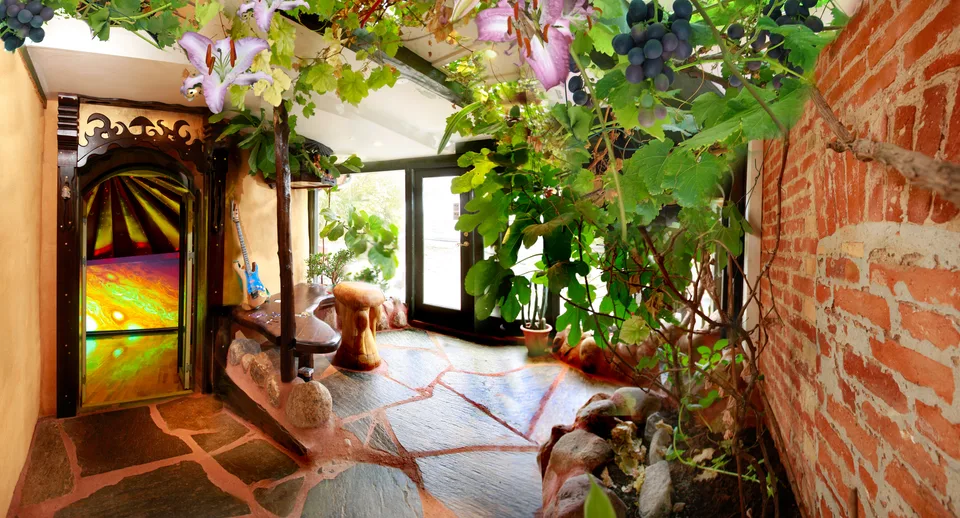
The foyer is the entrance to the studio. This is where the room inside meets the world outside – which is why, to me, it is the heart of the place.
Some of the plants here reach straight down through the foundations of the house into the earth. An old vine grows from the foyer through the other rooms and out through the wall, where it embraces Axis Mundi Studio from the outside. The vine is the Tree of Life.
Much of the furniture, the door posts and the shelves are carved by hand.
The mandala
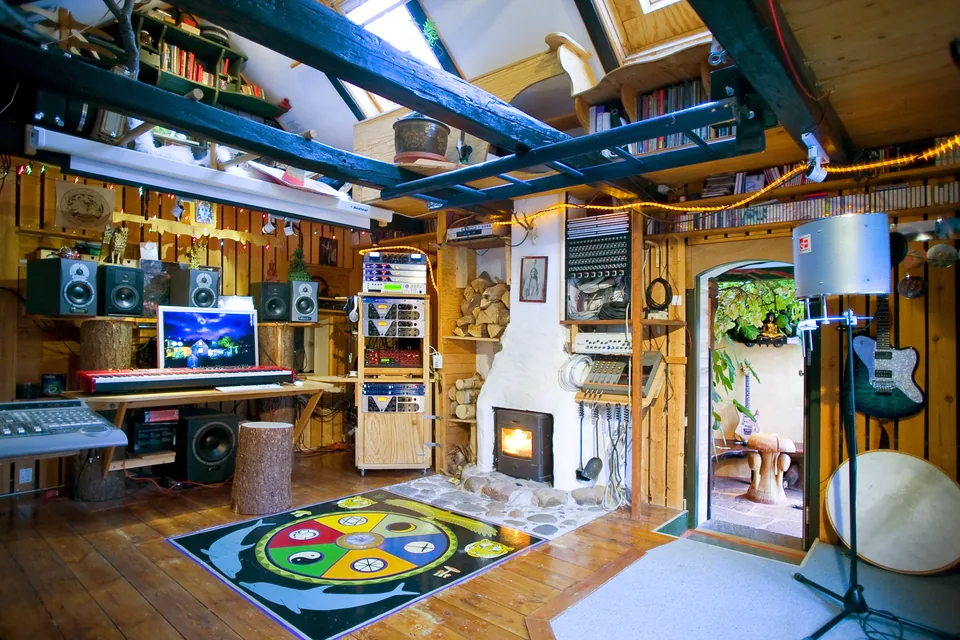
In the floor of the studio's “cockpit” lies a mandala. It is divided into six equal fields, and each field carries the symbols of one of six world religions:
- the three largest in the West: Christianity, Islam and Judaism
- the three largest in the Far East: Buddhism, Taoism and Hinduism.
In mutual respect, the six religions point towards the same source.
Around the circle are four animals: the dolphin, the tiger, the snake and the eagle. To me they stand for the four elements and for humanity's first religion, shamanism.
Around it all is a square. It stands for agnosticism and atheism.
We are all sisters and brothers, sharing the same planet.
The Key to the Universe
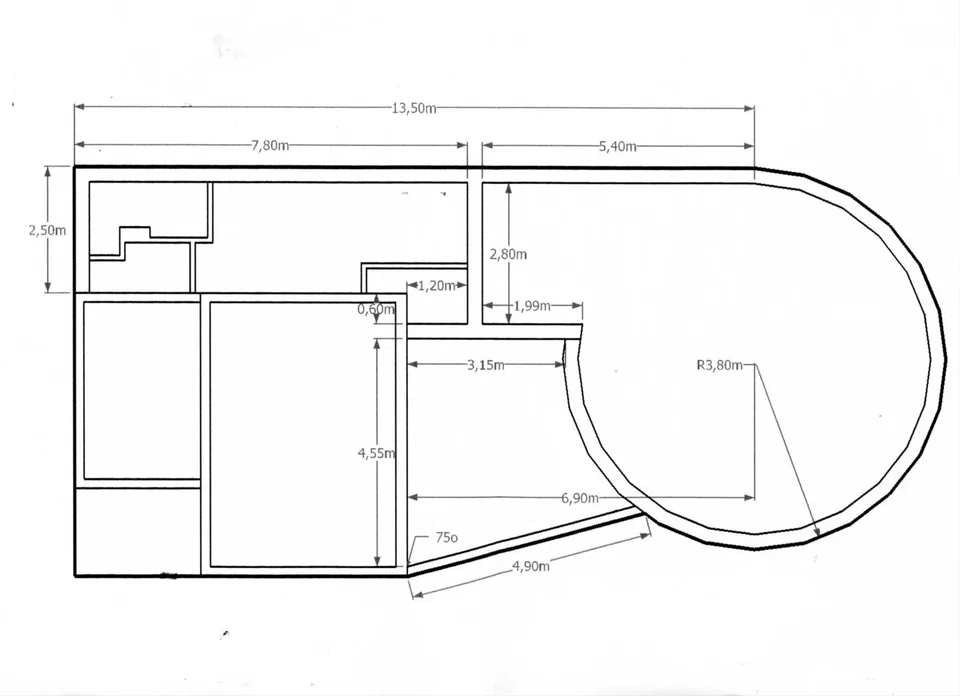
Draw Axis Mundi Studio as it looks from above, and you see a key. The ground plan is exactly 123.4 m². It is the key to life, to all that is creative and new – and to the Universe.
Every room in Axis Mundi Studio and in the garden lies at its own height, on purpose. It is a way of getting beyond “Flatland”, and an invitation to think and experience in more dimensions.
Flatland is the denial that the inner world exists and matters.
Through the Portal to the sacred garden
The Magic Garden is built like the Garden of Eden – a mythological landscape.
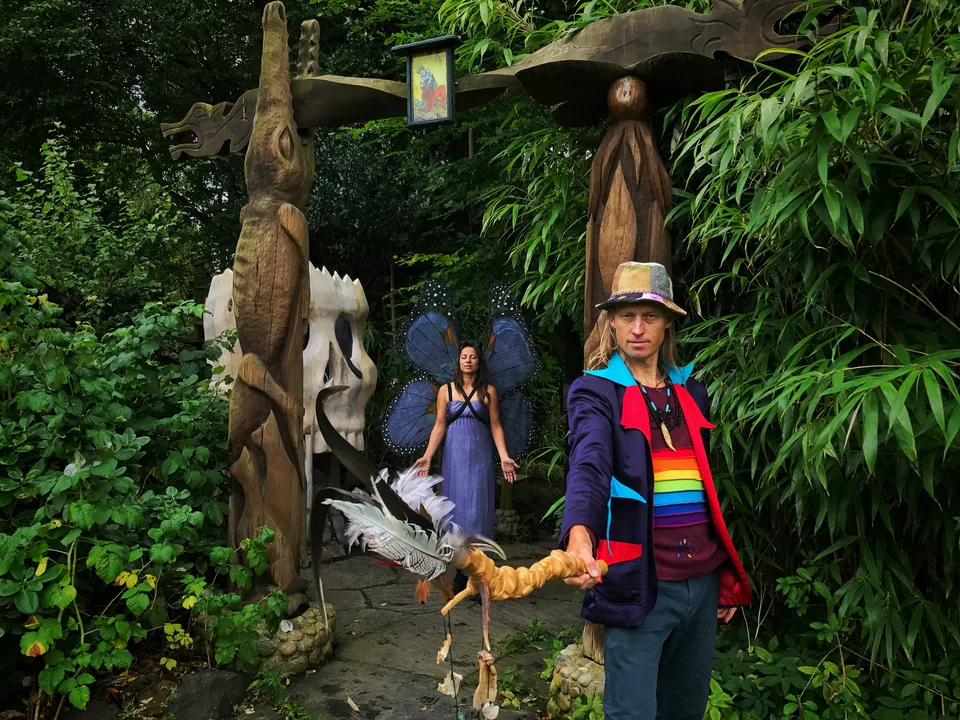
From the profane garden, the sacred garden is hidden from view. The only thing that gives it away is the Portal. It is tall, and it rests on two pillars carved with power animals.
When you walk through the Portal, you stand at the three classic paths: one goes to the left, one to the right, and in the middle runs the golden mean.
The Hero's Choice: three paths
Just inside the Portal is a very important place. We call it “the Hero's Choice”. Three paths begin here:
- To the right
- The Hermit's path. It climbs to the tower of Merlin the Wizard and goes down to the underground meditation chamber.
- In the middle
- The golden mean. It leads into the centre of the sacred garden.
- To the left
- The Death-Rebirth Tunnel.
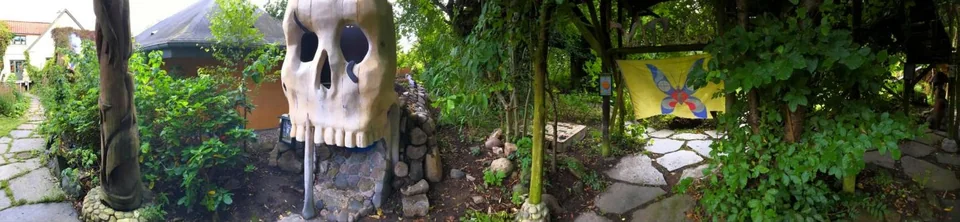
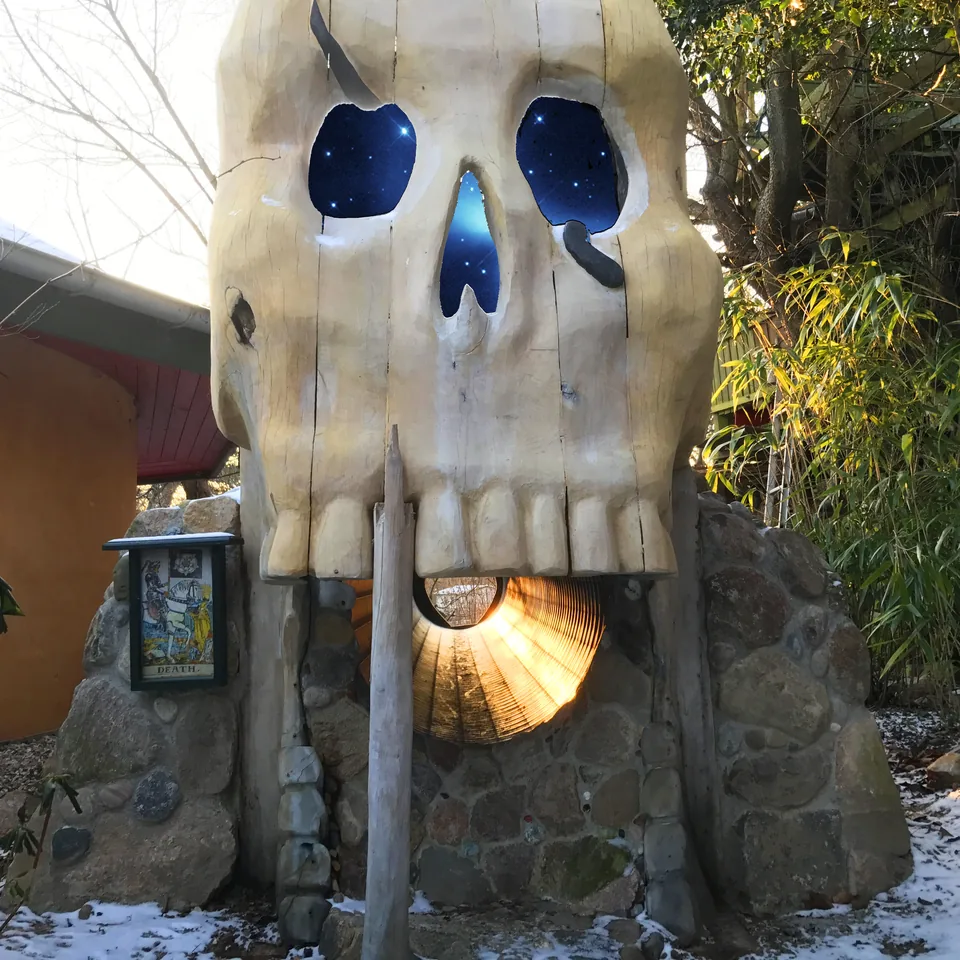
The Death-Rebirth Tunnel
In the middle of the garden, right next to the Portal, lies the Death-Rebirth Tunnel. It is one of the truly important archetypes that have taken shape here, and it is central to everything this place does.
Rites of passage have existed in every age and in every culture.
Modern consciousness research has shown that a deep experience of psychospiritual death and rebirth is vital for our quality of life and well-being. It leads to the healing experience of oneness and releases our fear and anxiety.
The centre of the sacred garden
The innermost part of the garden lies quiet, hidden and undisturbed behind trees and hedges.
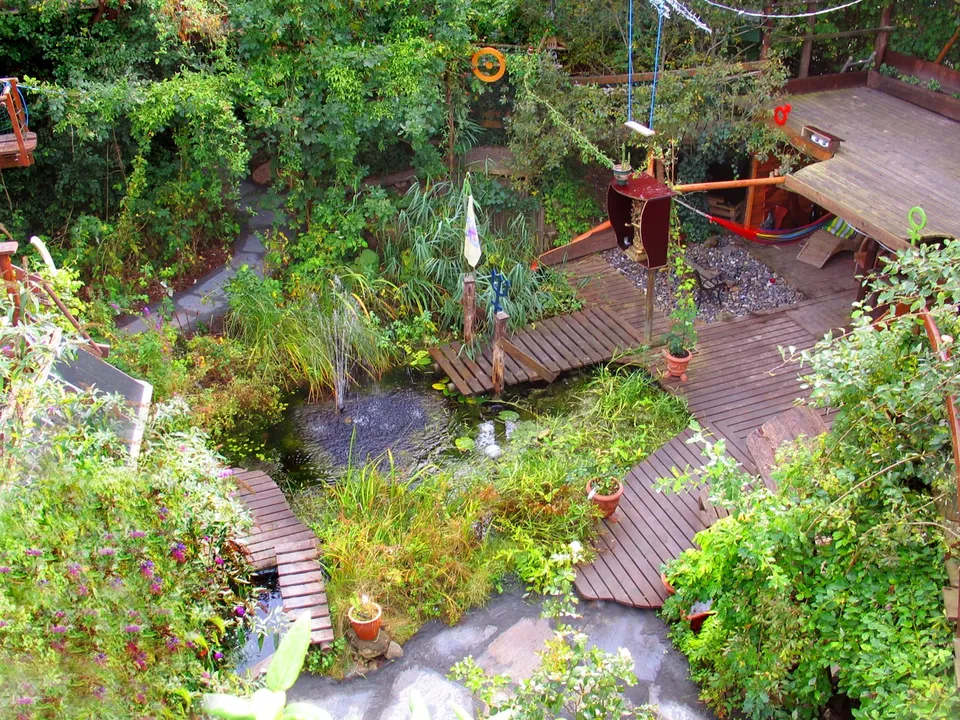
It is built as a medicine wheel around a lake. From the lake, the water runs on into smaller lakes and little waterfalls, and its trickling brings freshness to the plants, the animals and the spirits of the garden.
The garden is divided into sections and levels, joined by paths, stairs, spiral staircases, walkways, a suspension bridge, platforms, plateaus, a tunnel and small hills.
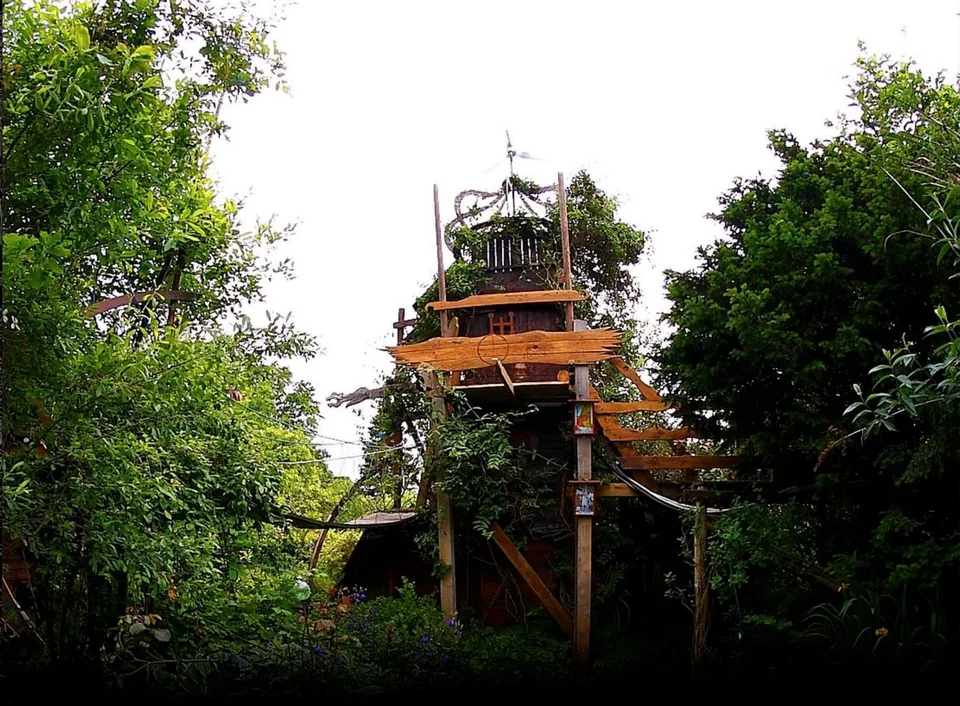
There are places for contemplation, rest, new strength and inspiration: flower beds, a tower, an elf castle, a pavilion, a grandstand, an underground meditation chamber and a stage among the trees.
Something very special about the garden is that it joins nature and culture on purpose. The plants and trees grow together with what we have built. In several places, beech, oak, poplar and willow have been trained to carry the upper levels, and their branches weave into the walkways.
I started building The Magic Garden in 1995, and now the trees and the ivy are growing together with all the buildings.
The walkways run through the crowns of the fruit trees – cherry, plum, apple and nut – whose branches are bent into tunnels. So fresh vitamins are always within reach.
Climbing plants grow everywhere – ivy, honeysuckle, clematis, wisteria and winter jasmine – twining into one another in a rainforest symphony.
The garden also has plenty of magical lights and fountains, and all of it runs on green energy.
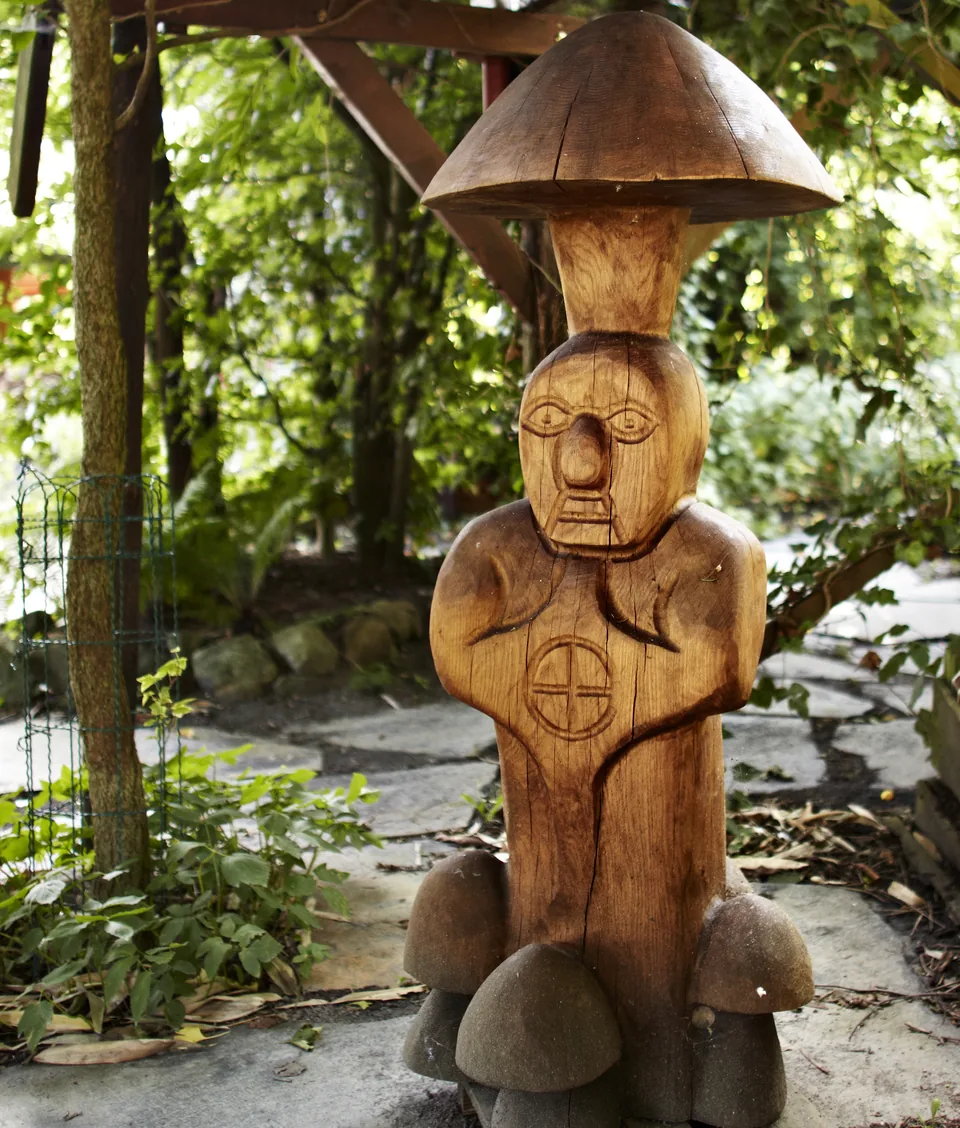
Figures, symbols and beings from many parts of the world help to create the vision of a microcosm. Among them are Odin with his two ravens, looking out over the world, a Mayan mushroom god and the Cosmic Tree.
Many who come here are completely swept away. They say they feel like children again, or that they step into other states of consciousness.
More about the garden
- The garden and the RoundhallThe visit itself: where to park, what you see and what happens in the Roundhall.
- Our storyThe vision of 1995, and the 22 years it took to build the garden.
- Jacob MothThe man who drew the garden and built it.
- The Magic Garden & the Adventure of Self-Discovery ↗Jacob's book about the garden, 718 pages, on jacobmoth.com.