Archetypes
Archetypes and archetypal astrology – keys to the psyche and the Universe
Archetypes are universal patterns that work on every level – from the psychological to the cosmic. C.G. Jung gave the idea its modern form, and Richard Tarnas developed archetypal astrology by mapping how the cycles of the planets connect with human history. Here I explain what that means, and how you can use it.
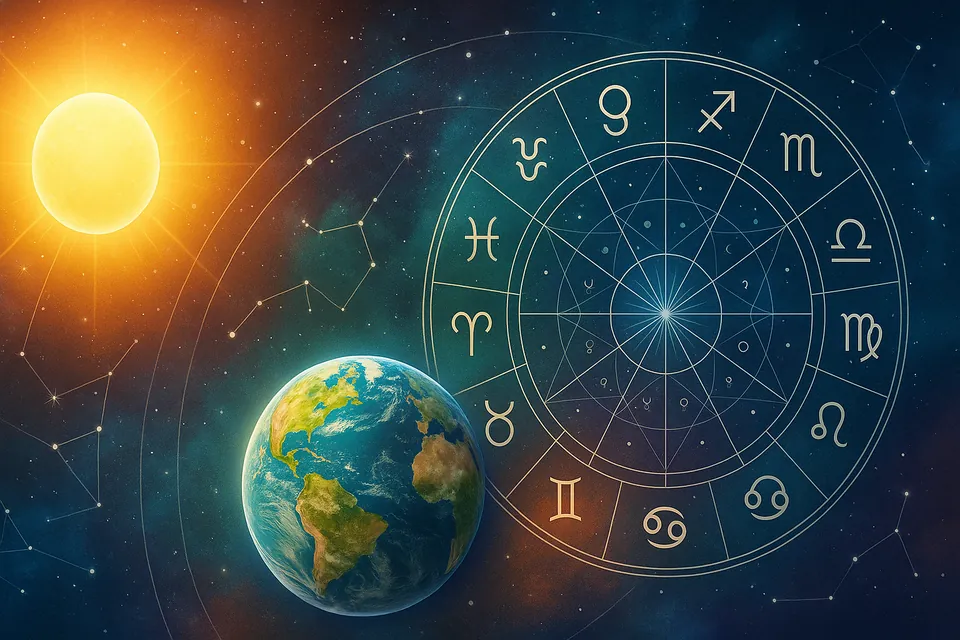
“There is a connection between the planets and the archetypal dynamics of human life. This connection has an astonishingly consistent, nuanced validity. I am convinced that it is one of the strongest signs that we live in a meaningful universe with a purpose.” – Richard Tarnas
What are archetypes?
The idea of archetypes goes back to antiquity (Plato, for example), but C.G. Jung (1875–1961) made it a central part of analytical psychology and gave it its modern psychological form as the “archetypes of the collective unconscious”.
Archetypes are central to understanding how the psyche and the Universe work. They are like ideas in the depths of a divine mind – universal patterns, templates for everything that takes form on every level of the Universe. They are not content to work in the psyche alone; they work in the dance of the planets, in the quiet breathing of the cells, in the small events of everyday life and in the great orders of society – in almost everything a human being can sense and experience.
What is archetypal astrology?
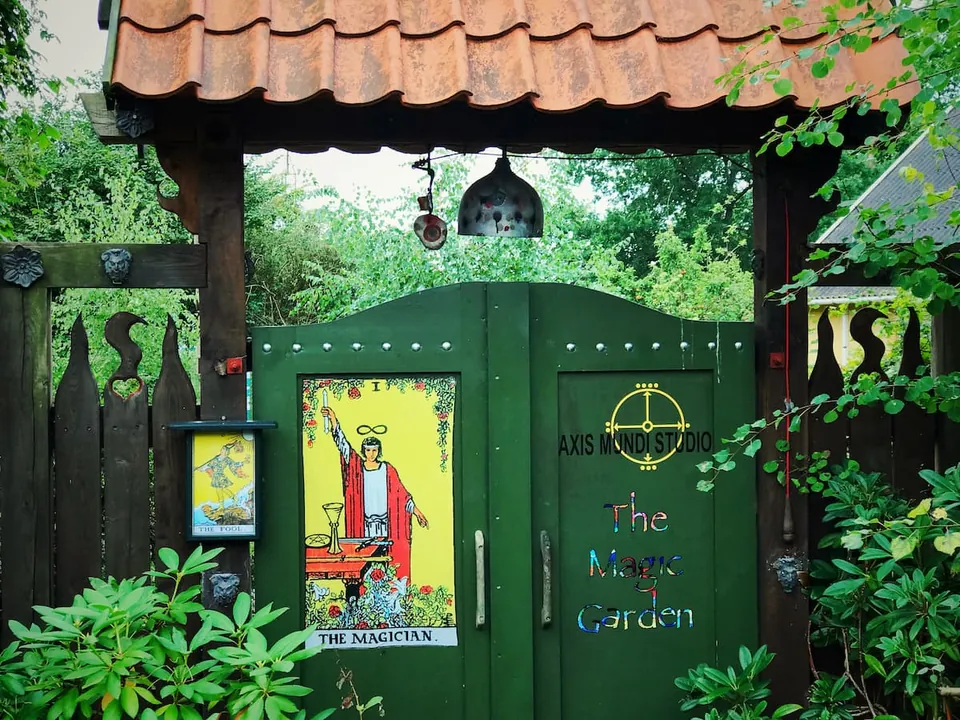
Archetypal astrology was developed by Richard Tarnas. Building on Jung, Dane Rudhyar and Jungian astrologers such as Liz Greene, he mapped the connections between the cycles of the planets and archetypal patterns in human experience and history. If you would like to read more, start with his book Cosmos and Psyche (2006) and the essay “An Introduction to Archetypal Astrology”. The field comes together in the journal Archai: The Journal of Archetypal Cosmology.
The archetypes – an extract from my book
What follows is an extract from my book The Magic Garden – The Adventure of Self-Discovery:
The seventh pathway in the book is archetypal astrology. Richard Tarnas is a cultural historian, astrologer and professor emeritus of philosophy and psychology. For a decade he was director of programmes at the iconic Esalen Institute. From the 1960s to the 1980s, Esalen was the cultural and philosophical Axis Mundi, where Alan Watts, Joseph Campbell, Stanislav Grof, Richard Tarnas, Ram Dass, Huston Smith, Terence McKenna, Rupert Sheldrake, Frances Vaughan, Gregory Bateson, James Hillman and other great pioneers of transpersonal psychology taught and held workshops.
Tarnas is the founding chair of the graduate programme in Philosophy, Cosmology and Consciousness at CIIS (the California Institute of Integral Studies), where for the past three decades he has taught the history of ideas, depth psychology and archetypal studies, and the evolution of religion. He has worked closely with Stanislav Grof, and he is the author of The Passion of the Western Mind and Cosmos and Psyche. In Cosmos and Psyche he goes systematically through the major aspects between the five outer planets and their archetypal complexes, and documents how they connect with world history.
The Greek word archetype means something like original pattern. Archetypes are abstract, many-sided, universal forms that can show themselves in many different ways and on many different levels.
Archetypes are very hard to describe, and at the same time they are at the very heart of understanding how the Universe is built and how it works. Archetypes are cosmic, original and guiding principles. They are the great structures, the basic forms of energy – a kind of universal building blocks that serve as templates for the different elements of the material world and of the psyche. The word archetype can be used for a wide range of things, processes and situations.
Great and small archetypes
There are both great and small archetypes. Examples of archetypes are the Great Mother, the Hermit, the Trickster and Death. We also speak of the archetypes of the lion, the cat and the human being. An animal's instinctive behaviour and way of being are guided by its archetype. A cat, for example, does what a cat does.
There are also non-material structures, such as the invisible forms that make ice crystals grow into patterns on a window pane. Genres in literature and music are guided by archetypes too. Rock music, for example, has one archetype – its own special energy and its own musical expression. Models of thought in science, famous people, rituals and syndromes in psychiatry are other examples of archetypes.
There are many metaphors for archetypes. As the Native Americans say, the Great Spirit is in everything. The Universal Principle runs through our whole world, from the smallest invisible particles all the way out to the galaxies. Behind it all are the original forms and structures – the archetypes – which run through the whole Universe and speak to us through trees, stars, birds and plants.
Three perspectives on archetypes
In his groundbreaking book Cosmos and Psyche, Richard Tarnas describes three important perspectives on archetypes:
- Homeric: as mythological principles – Zeus, Hera, Hades, Aphrodite. The gods of Homer, the Greek tragedies and the mythologies of the world.
- Platonic: as philosophical principles, forms and ideas from the philosophy of Socrates, Plato and Aristotle. Many people know Plato's theory of forms.
- Jungian: as psychological principles – basic patterns in the psyche.
The archetypes in The Magic Garden
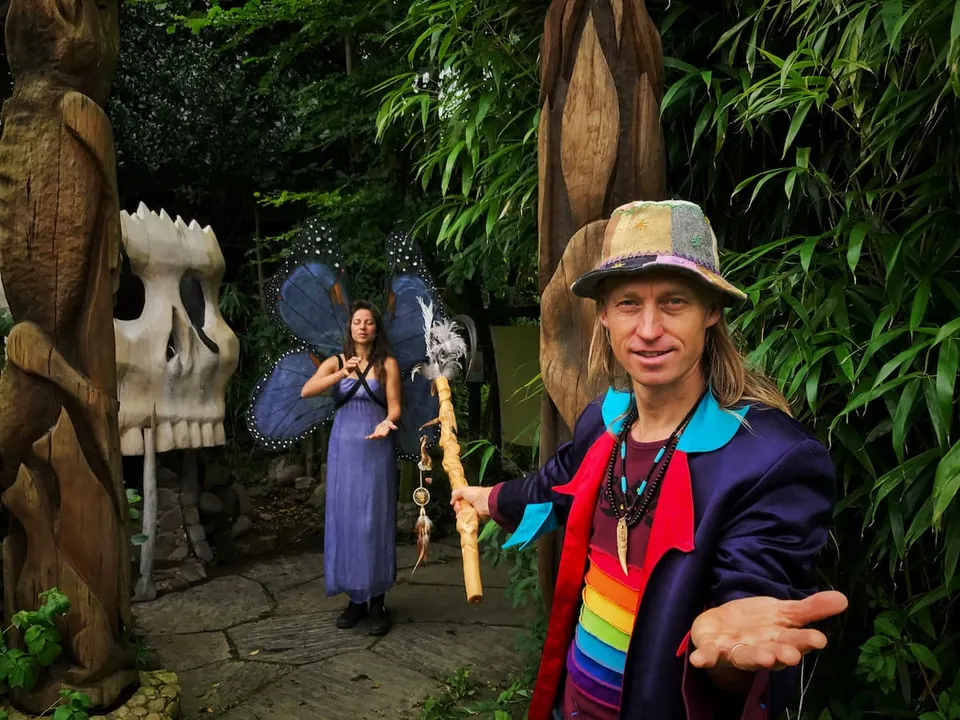
In The Magic Garden, the archetypes take shape as symbols and as sculptures, towers, an underground room, a death-rebirth tunnel and the Roundhall – to name just a few. They make The Magic Garden a powerful place, because they work like antennas: they make it easier to come into contact with these energies, and they give them a form.
What does that mean in practice? The archetypes are the great forces we all know from life – death and rebirth, the mother, the hero who sets out on a journey. In the garden they have a form you can see and move through. When you crawl through the death-rebirth tunnel, for example, you feel in your body what it is like to let go of something old and come out into something new. That is how the archetypes become something you live through, not only something you read about – and you begin to recognise them in your own life. Read more about the symbolism of the garden.
Reflections – the archetype knocking at your door
- Which theme keeps coming back in your life right now – in your dreams, your relationships or your work?
- If the theme were an archetype, who would it be (the Hero, the Shadow, the Great Mother, the Trickster …)?
- Where do you feel it in your body – and what is it asking you to do, or to stop doing?
- What is the smallest brave step you can take today to work together with the archetype?
Questions about archetypes
What are Jung's archetypes?
Jung saw the archetypes as inborn patterns in the collective unconscious, which we all share. They appear as images and figures in dreams, myths and fairy tales – for example the Hero, the Shadow, the Great Mother and the Wise Old Man.
What is the difference between astrology and archetypal astrology?
Many people link astrology with predicting what will happen. Archetypal astrology, as Richard Tarnas developed it, looks instead at which archetypal themes are strong at a certain time – in the world and in your life. How those themes play out is open. The planets are not the cause; they show the pattern.
Light, love, harmony & blessings– Jacob