
Dream interpretation
What does my dream mean? How to interpret your dream – with an example
One of the questions I am asked most often is: What does my dream mean? It is a truly exciting question. For what are dreams, and how should they be interpreted?
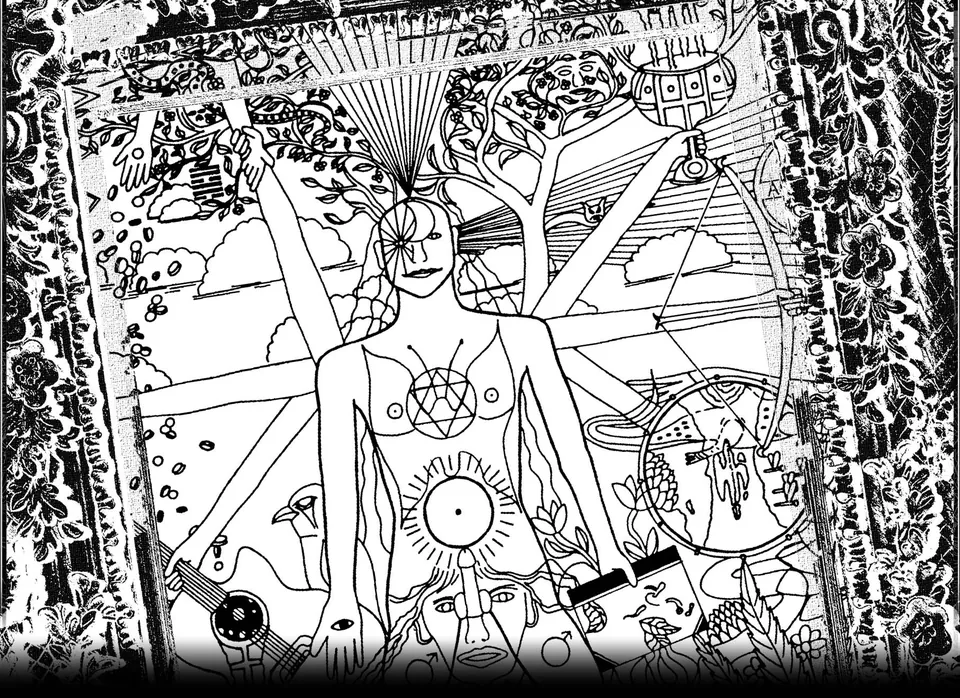
Freud said that “dreams are the royal road to the unconscious”.
Then came Grof, who said that “psychedelic substances and holotropic states of consciousness are the royal road to the unconscious”.
C.G. Jung said that “dreams are individual myths, and myths are collective dreams”.
So what on earth are myths?
What are myths?
Many people use the word myth as if it meant a lie. You often hear people say: That's just a myth. Meaning: it isn't true.
The internationally renowned professor Joseph Campbell, who spent his whole life studying myths from all over the world, was once asked in a live radio interview: What are myths? He answered: “They are metaphors.” The interviewer said: “No, they are lies.” Joseph Campbell: “They are metaphors.” The interviewer: “No, they are lies.”
Then it dawned on Joseph Campbell that the interviewer did not know what a metaphor is, and he played his card: “Tell me, what is a metaphor?” Silence in the studio …
Do you know what a metaphor is?
Myths as metaphors
Transpersonal psychology and depth psychology rest on the assumption – based on empirical research, it should be added – that our core, our deeper and higher Self, communicates with us through our dreams, and on a collective level through myths. And that this communication happens through metaphors.
This means that the images, storylines, landscapes and so on that appear in dreams and myths have to be interpreted. For the inner world – as Ken Wilber has said – cannot be measured and weighed. It can only be interpreted. And for inner dreams, inner experiences and myths to be understood and used, they must be interpreted in a meaningful way. Otherwise they make no sense.
One of the biggest mistakes made since the Industrial Revolution and the “Enlightenment” is to take myths and dreams literally. That is what makes them absurd.
Christians, for example, have firmly believed that the world was created 6,000 years ago, because that is what the Bible said. Or people have tried to map Odysseus' voyage and seriously searched the outer world for the islands it tells of.
In doing so, they completely miss what the Odyssey is about. It describes the inner journey in metaphors.
Dreams and myths are, of course, interpreted through the worldview we have taken on along our life path. So it makes a very big difference to how you interpret and understand a dream (or a myth) whether you live in Denmark and are an atheist, or are a monk in a Tibetan monastery.
An example makes this clear:
Imagine that you have a dream or an experience of “the White Light”.
You are completely bathed in white light, all your ordinary ego boundaries disappear, your here-and-now sense of your ordinary everyday life dissolves in this white light, and you feel yourself melting together with the Source of the Universe. Call it an experience of God, if you like.
If you go to your psychiatrist and tell them about this experience, there is a good chance that you will be given a diagnosis of one kind or another. You will be prescribed a medicine to dampen your symptoms, so that you can become “normal” again.
If, on the other hand, you go to your lama in the monastery, he will probably recognise your progress on your spiritual path and give you some new mantras and ways of meditating to help you even deeper on your way towards non-dual consciousness.
Okay, I think you see what I mean.
So we interpret our dreams, and our experiences from journeys in inner space, through the worldview we hold. All pre-industrial cultures had collective myths that gave them a shared map of both their inner and their outer world.
We do not have that today. Each of us is left to create our own inner mythological landscape.
“Help,” you may say. “That sounds completely overwhelming. How can I know that the way I interpret my dreams is right?”
This is where the Adventure of Self-Discovery begins.
The adventure of self-discovery and your first dream
Luckily for those of us who live in this unique and exciting time, many great pioneers have walked the path before us. They have given us a remarkable map we can use to find our way in consciousness. These pioneers have also developed a wide range of techniques and methods for interpreting and understanding the metaphors in which our unconscious and our higher consciousness speak to us.
Let me give you a concrete example to shed light on the many themes I have touched on, and to give you a better idea of what I am trying to convey.
In transpersonal and Jungian psychology it is well known that our first dream – or one of the first dreams we remember or have written down – is very often an “initiation dream”. A dream that reveals themes that matter to us in this cycle of life, and that can in some way serve as important landmarks.
How a dream can be interpreted – my own example
Since my teens I have kept a detailed diary. The essence of my inner journey – my Adventure of Self-Discovery – I have published in my book Land of the Nocturnal Butterfly. Here is an extract about my first dream and my interpretation of the metaphors it holds. I am 16 years old at the time, so this is before my shamanic initiation crisis.
My dream from 1983
From Land of the Nocturnal Butterfly:
Another dream from the same period seems almost like a kind of prophecy. I had taken to my bed, ill with inner unrest, and lay awake all night. The music we were working on kept going round in my head, and I felt I was being eaten by demons. In the morning I finally fell asleep and dreamt the following:
Dream, 29 October 1983
There is a man who is following me and a girl I have found. It is a beautiful landscape with hills, mountains, lakes, forests and only gravel roads. So that X (the one following me) cannot follow us, I tie a board to the back of the horse-drawn cart. When we have gone some way, the cart breaks down, and I let the girl off. I carry on on my blue Gitane racing bike to draw X's attention away. I ride through a town and hide on the far side of it to see whether X is following me. A little later X rides past me. I hurry back towards the town (this is the turning point), where I hide behind a fence by a large villa.
At this point I become very ill. Then some people come out of the villa and ask me what I am doing there. I tell them the situation as it is and let them take me inside the villa. I also ask them to move my bike, so that it will not give me away. Then I go upstairs – it is a very big house – and try to find my place.
The first room I find is the children's room, the next is the bathroom; in the third room a fine married couple sit quarrelling; after that there is a room with some hippies. Then, in an enormous living room, all the cultures of the world are gathered! I find a sofa and sit down on it. At first the people there think I am to stay for a quarter of an hour to an hour, but I feel very ill and would like to stay longer. Then a big orchestra starts to play.
It all ends with me getting a big car and meeting X, who is also driving a big car.
My written record of the dream ends here. The dream feels unfinished, as if I was interrupted while I was writing it down.
What does the dream mean? My interpretation
From where I stand today, I have no doubt that X represents my “calling”. That is, the force that pulled me into the inner universe and meant that I had to devote a decisive part of my life to self-discovery.
The house I arrive at is the house of consciousness. I am very ill. This is the shaman's initiation illness – “shaman sickness”. What I am looking for is “my place”.
Where do I belong?
I am led through the children's room (the Land of Childhood) and the bathroom (cleansing) in to the married couple sitting there quarrelling. The quarrelling couple stands for one of my main working gestalts, which is connected with the Sacred Marriage.
The goal of the process – the individuation process, as Jung calls it – is the alchemical wedding: the union and transcendence of all polar opposites, including the masculine and the feminine side of the human being. On an outer level, the dream points quite concretely to my relationship gestalt, which is one of my very big psychological working gestalts.
I grew up with parents who in many ways represent the idyll of the happy marriage. But it was clearly not meant for me to follow straight in my parents' footsteps in this respect.
As I touched on earlier, in connection with ending one young love before a new one began, my later marriages have been rather turbulent.
Something in me longs for ultimate freedom.
This ultimate freedom, however, is reached first of all by creating harmony in the inner arena – and there was absolutely no such harmony in my mind when I was young.
Back then it was only really beginning – slowly – to dawn on me how much chaos I had inside.
This search for ultimate freedom can also be hard to reconcile with a steady relationship. That is why the couple in the dream are quarrelling: the psychic energies between them – and in me – are full of tension and highly dynamic. Here we see my Uranus/Pluto square to Venus again.
Next I meet the hippies (the counterculture, the counterweight to our materialistic culture). Here I would like to add that the best of what the hippie movement of the sixties brought forth was, and is, beyond any doubt something great, good and lasting.
I am a child of the sixties myself, and with Jimi Hendrix as my great source of inspiration and one of my important spiritual teachers, I pick up the thread from the hippie movement.
In the end, in the dream, I discover that all cultures are present in the house.
It is the whole pool of human experience gathered in one place. We are clearly in the transpersonal layer of the psyche. I thought I would only stay a short time in the troubled part of the transpersonal layer of consciousness. In the folly of my youth I had counted on discovering the deeper mystery of life, and coming to terms with it, fairly easily, quickly and painlessly – and on carrying on in the footsteps of my hero (Hendrix), who died far too young.
But alas, I was sorely mistaken.
I was very “ill”, and the illness I had caught was, as I said, the first “shaman sickness” that comes with initiation.
Shaman sickness and initiation come into play when the barrier between ego consciousness and the endless ocean of the unconscious breaks down, and ego consciousness is flooded with so much unconscious psychic material that the levels of reality become mixed up.
The chosen shaman-to-be has no choice. The spirits have called him, and he must carry his destiny, whether he wants to or not.
X follows me all the time, whatever ways of escape I choose. Only when I arrive at the House of Consciousness, or the School of Life, does X let go.
If we follow the idea that this dream is a kind of prophecy about the rest of my path, then the big orchestra playing at the end of the dream must point to my career as a musician.
But the dream also says that before I can really get myself a “big orchestra”, I must set out on the inner journey. Astrologically this shows in my other big working aspect, Saturn (time) square my ascendant (persona). My shamanic calling leads me into the world of music, but it will probably take some time before I manage to bring the music out into the outer world. Some fruits ripen later than others. Some trees die younger than others.
At this point in my life, my unconscious has finally chosen the car as the symbol of a fully integrated, dynamic ego. Here I meet X, who is also in a car. We are now on the same level. X's “life task”/dharma and mine are in tune.
What was your first dream? And what does it mean to you?
How to interpret your own dream – six steps
No dictionary can tell you what your dream means. The pictures are your own, and you are the one who can best feel what they point to. But there is a way of approaching a dream that makes it easier. This is how I do it myself:
- Write the dream down as soon as you wake up. Keep a dream diary by your bed. Write in the present tense and with every detail, including the ones that seem unimportant, and add the date. A dream is forgotten within minutes.
- Write down what you felt. Were you afraid, happy, confused – or ill, like me in my dream from 1983? The feeling is often the clearest key to what the dream is about.
- Read the pictures as metaphors, not literally. Ask of each picture: What does this mean to me? In my dream the house is not a real house but the house of consciousness.
- See the people as sides of yourself. The one following you may be a force in you that you have not met yet. In my dream, X was my calling.
- Find the turning point. Most dreams have a moment where the direction changes. I marked it in brackets myself as I wrote the dream down. That is often where the message lies.
- Place the dream in your life. What is happening in your life right now that the dream could be about? And keep your dreams: over months and years the patterns show themselves, and some dreams you only understand many years later, as I did with my first.
Remember that you interpret through your own worldview. That is no mistake – it is how dreams work. And if you want to go deeper, it can help to tell the dream to another person who can listen without giving you the answer.
Questions about dreams
Do all dreams mean something?
Not all dreams are equally big. Many simply sort through the impressions of the day. But the dreams you remember – especially the ones that come back, or that you can still feel in your body when you wake up – are worth writing down and interpreting.
Why can't I remember my dreams?
We all dream every night, but most dreams are forgotten soon after we wake up. It helps to lie still for a moment before you get up, and to write straight away, even if you only remember a single picture. The more often you do it, the more you remember.
Can a dream tell you something about the future?
I experienced my own first dream as a kind of prophecy: the big orchestra became the music in my life. But first and foremost, a dream tells you something about yourself and the path you are on – often more than you know when you wake up.
I encourage you to keep a dream diary by your bed.
Blessings, Jacob